The history and economics of artificial intelligence
From Neuron to Trillion-Dollar Capex
A story in twelve chapters about how artificial intelligence got here, and who makes money from it.
Stories about artificial intelligence are supposed to begin with a robot, preferably one with red eyes and a grievance. This one begins with a shopping trip.
In 2012 a graduate student in Toronto trained a neural network on two graphics cards. They were GeForce GTX 580s, a product engineered, with great care and at considerable expense, so that teenagers could shoot one another in higher resolution.
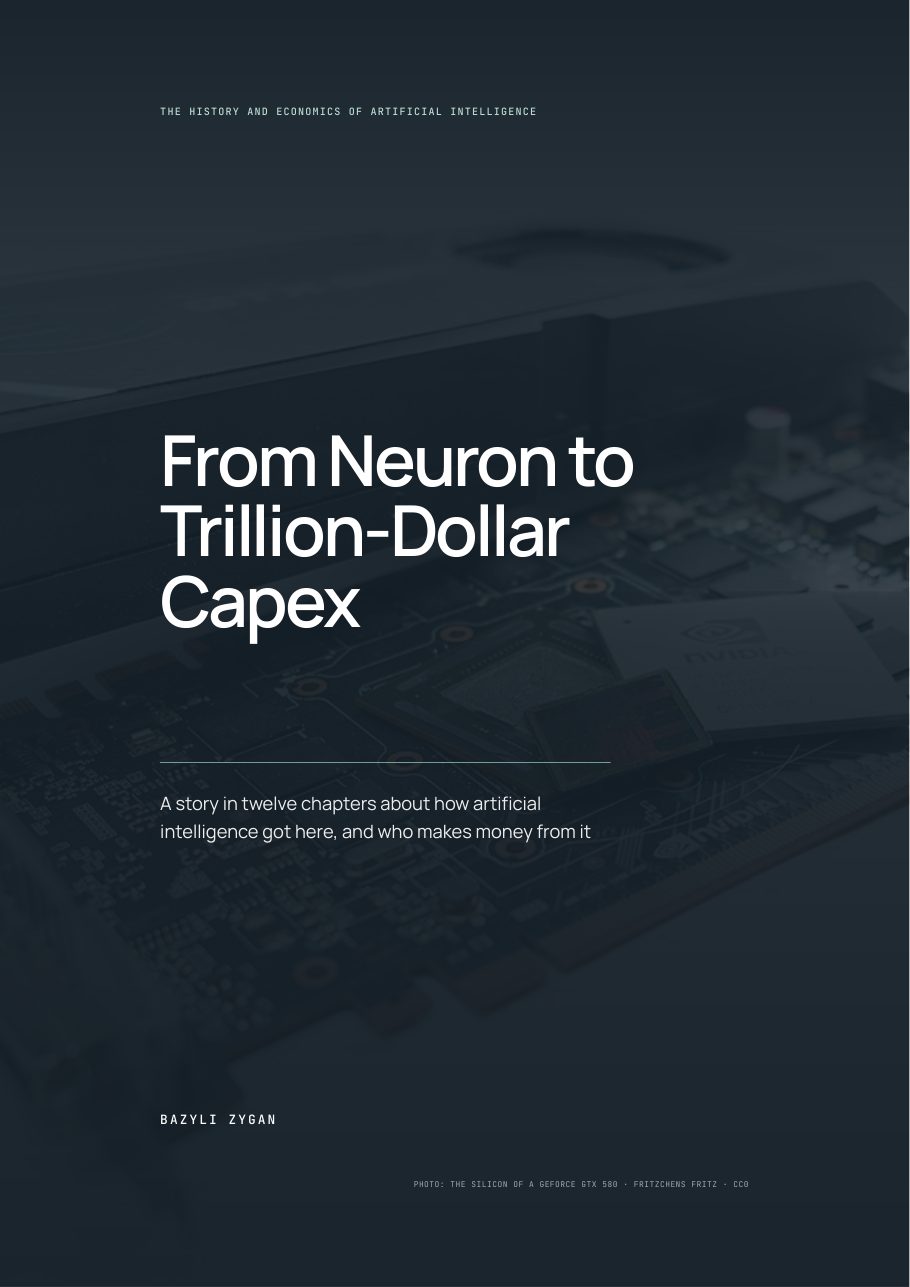
Today, companies are building data centres for AI whose appetite for electricity rivals that of a small city. This book is about what happened in between, and who captures the value.
Fourteen years of appetite
- 488 W
- Two graphics cards in Toronto, 2012.
- 1.2 GW
- One data-centre campus in Abilene, Texas, planned for 1.2 gigawatts.
The areas are to scale. The small square is almost two and a half million times smaller than the large one, so even this is drawn too big.
What is inside
Twelve chapters in four parts. The first explains how the thing thinks, the second what it eats, the third where it is going, and the fourth who is fighting over it.
-
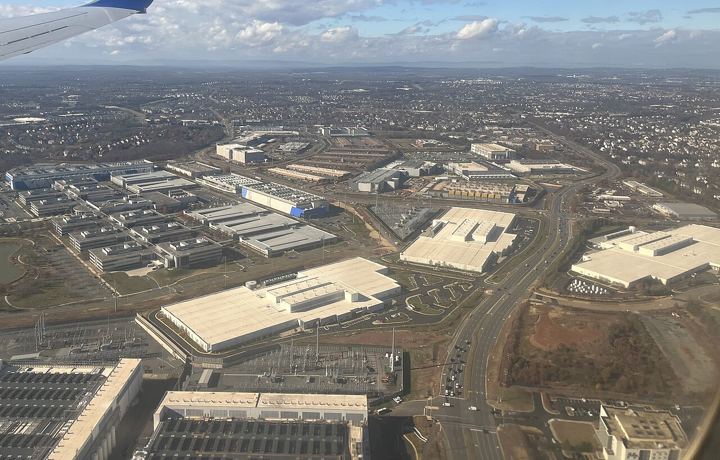
Introduction
Two pictures, three threads and a map of the whole story.
In the free sample
Part I IntelligenceHow AI works
-
 01
01
How Machines Learn
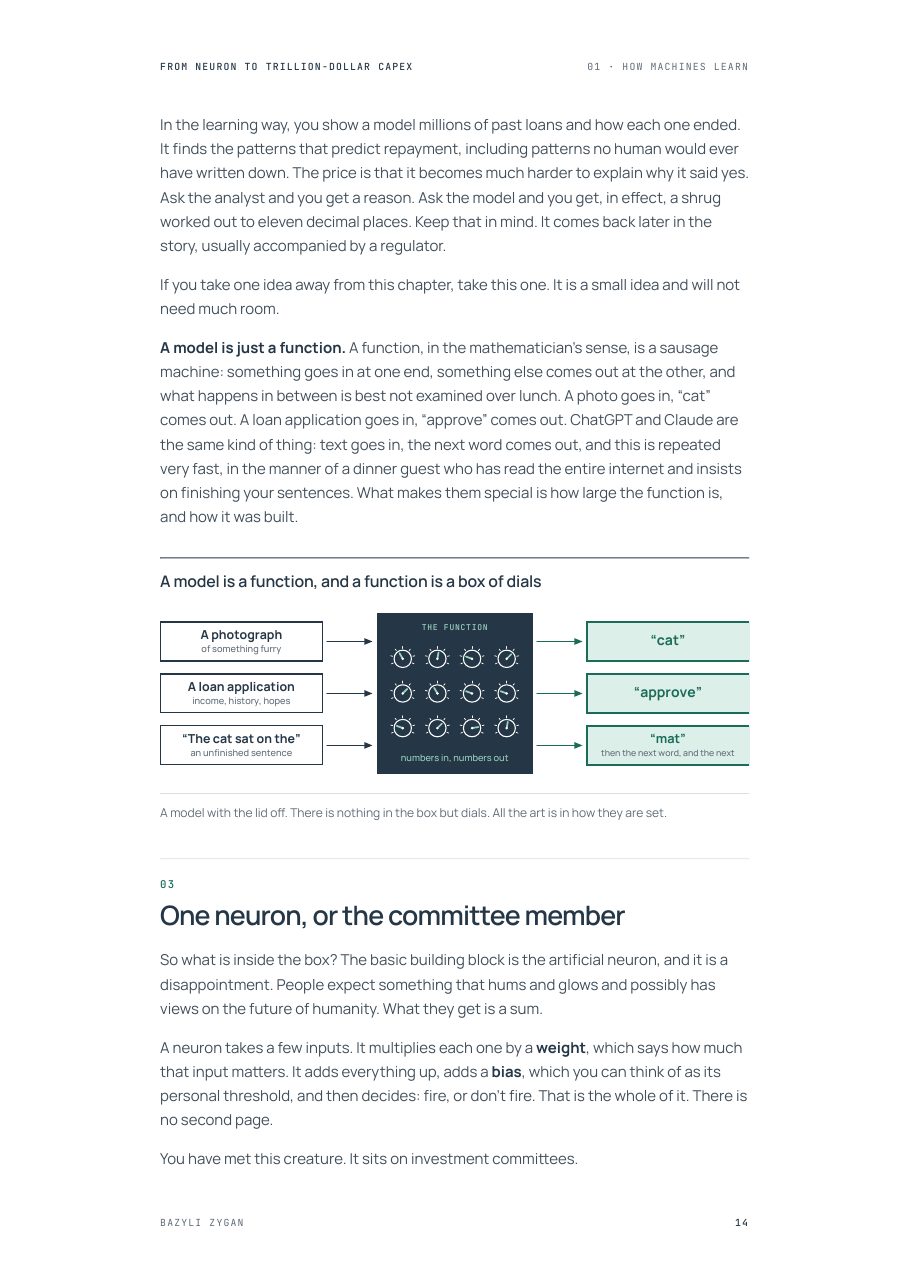
Neurons, layers and gradient descent, and why AI waited 30 years for its moment.
In the free sample -
 02
02
Machines That See
CNNs and the 2012 ImageNet moment, when gaming GPUs entered AI.
-
 03
03
Attention Is All You Need
From RNNs to the Transformer, the architecture built for parallel hardware.
-
 04
04
Building a Language Model
Pretraining, scaling laws and RLHF. What it really takes to train, and to serve.
Part II Compute & EnergyThe physical layer
-
 05
05
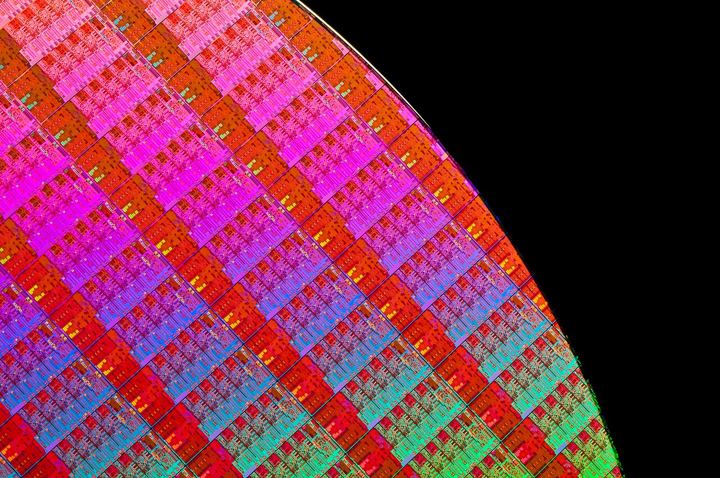
The Economics of Silicon
Why GPUs rule, why they cost so much, and who controls the supply chain.
-
 06
06
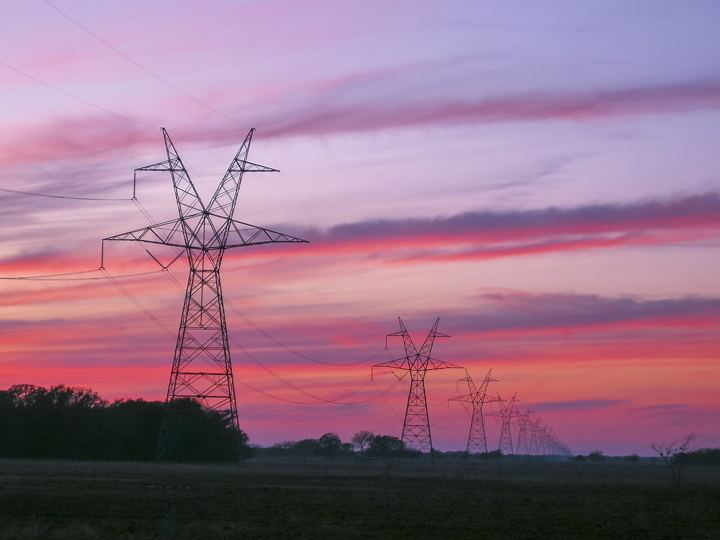
Power & Alternative Compute
AI's electricity bill, and the challengers: analog, photonic and neuromorphic chips.
Part III The FrontierGenerative and next-generation
-
 07
07
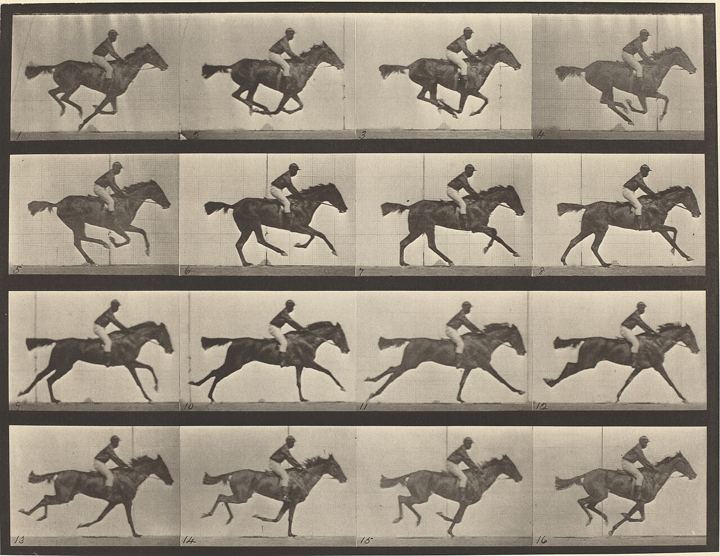
Pictures in Motion
GANs, diffusion and Stable Diffusion, and why video is the hardest problem yet.
-
 08
08
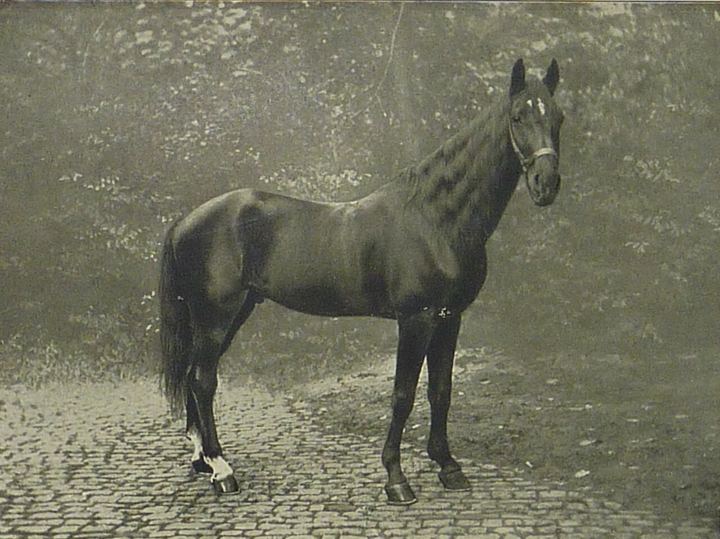
Beyond the Transformer
KAN, Mamba, Mixture of Experts, reasoning models and agents. Does scaling still work?
Part IV Sovereign RaceUS, China, Europe
-
 09
09
The DeepSeek Moment
How a Chinese model shook the market, and the distillation wars that followed.
-
 10
10
China Today
GLM, Kimi and Seedance: efficiency, open weights and price as strategy.
-
 11
11
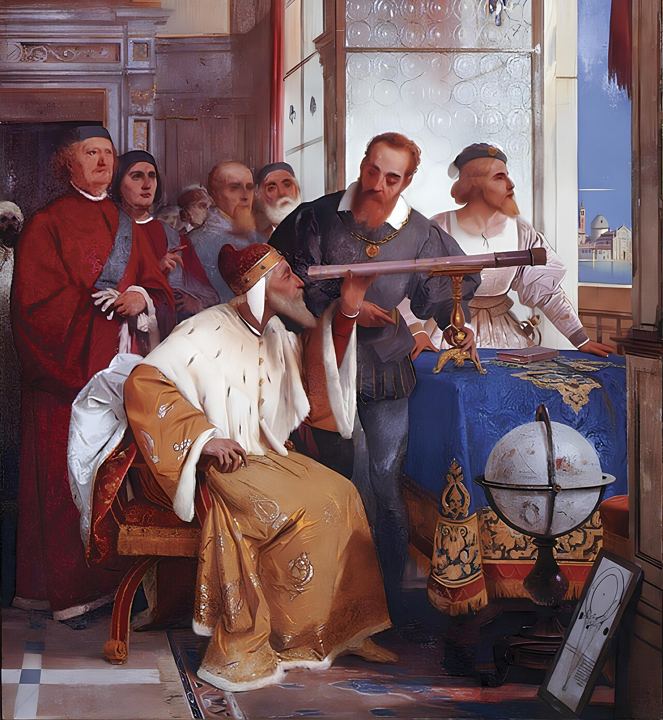
Europe: Player or Spectator?
Mistral, Bielik, ASML and the AI Act. Where Europe leads, and where it lags.
-
 12
12
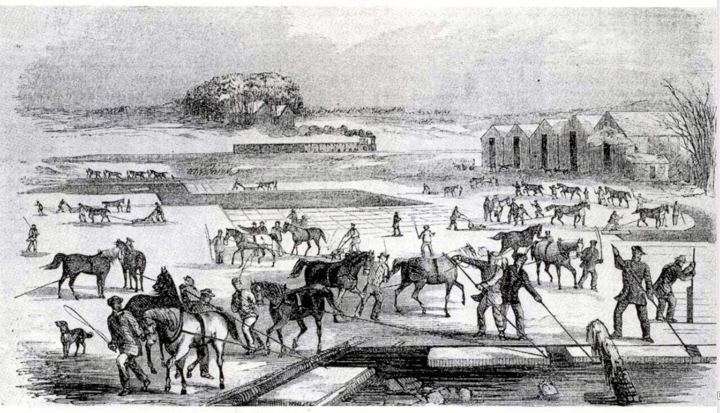
Mapping the Value Chain
Chips, cloud, models, apps: where the margins sit, the risks, and what to watch.
How it is written
- The facts are real.
- Every date, name and number has been checked, as things stood in October 2026. Only the tone is unserious.
- There is no mathematics.
- Where a sum is unavoidable, it is the kind you could do on a napkin.
- Where a process can be drawn, it has been drawn.
- 176 drawings, on the principle that nobody ever understood a machine from a paragraph.
- The photographs are of the actual people and machines,
- not of a glowing blue brain with circuit lines on it.
- Every chapter ends with the bill:
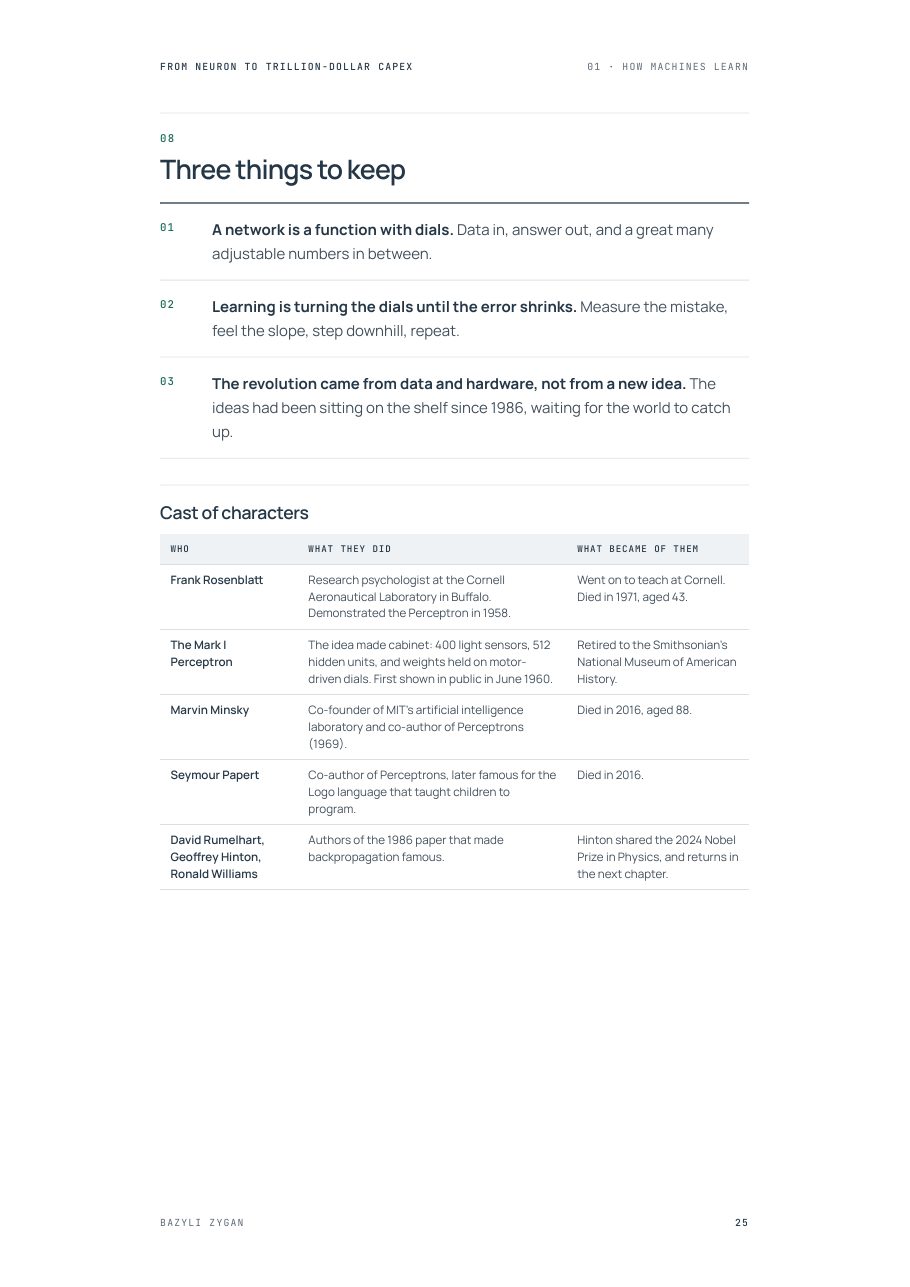
- who pays, who gets paid and who is safe behind a moat. Then three things worth keeping.
- The footnotes are where the narrator goes to mutter.
- You may skip them. It is, however, how people end up signing things.
Read before you buy
The introduction and the whole of the first chapter, exactly as they appear in the book, with the table of contents. 27 pages of PDF. No newsletter sign-up.
Download the introduction and chapter 1PDF, 27 pages, free, 2.9 MB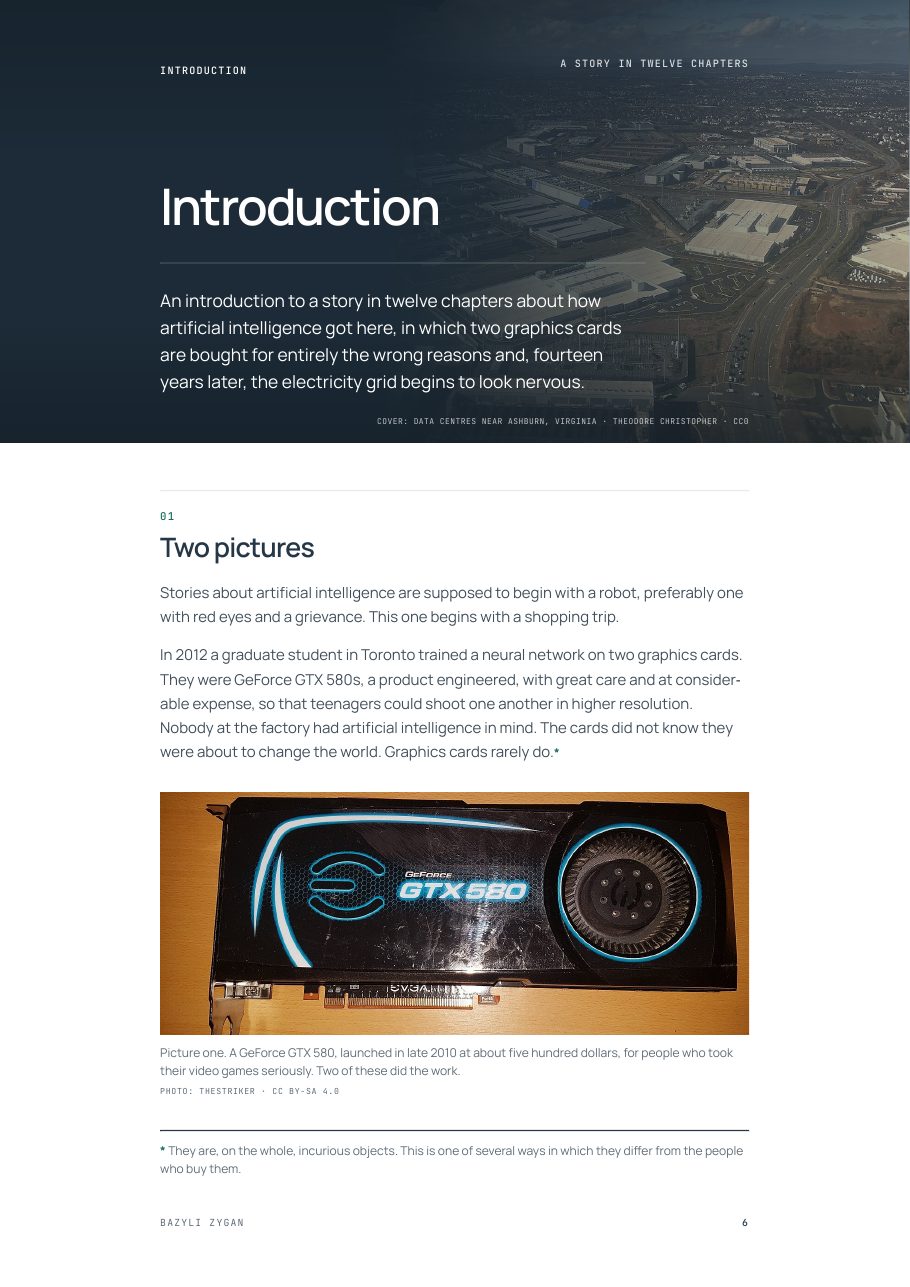
The whole book
€7
The price is low on purpose. I would rather many people read this book than a few put it on a shelf.
- 331 pages as PDF and EPUB
- The English and Polish editions in one purchase
- 176 drawings and about 150 photographs
- No DRM: the file is yours to read on anything
Pay by card, Apple Pay or Google Pay. The files are ready to download the moment you have paid, and the link also arrives by email.
Questions
What can I read it on?
The PDF is typeset like a book, on A4 pages, and reads best on a computer or tablet, or printed. The EPUB reflows to fit the screen: e-readers, phones and Apple Books. Kindle accepts EPUB through Send to Kindle.
Do I get both languages?
Yes. One purchase gets you the English and the Polish editions, each as PDF and EPUB.
I lost my download link.
It came by email with your payment confirmation. If you cannot find it, write to bazyl@bazyl.net from the address you paid with.
Can I get a receipt or an invoice?
The payment receipt is emailed to you automatically. If you need an invoice, write to bazyl@bazyl.net.
Can I get a refund?
The files are delivered as soon as you pay, so at checkout you agree to immediate delivery and the 14-day withdrawal right ends. If something is wrong with the files, write to me and I will fix it or refund you.
Is this investment advice?
No. The book is journalism and education. Money is in it because it is the quickest way to see who is winning.